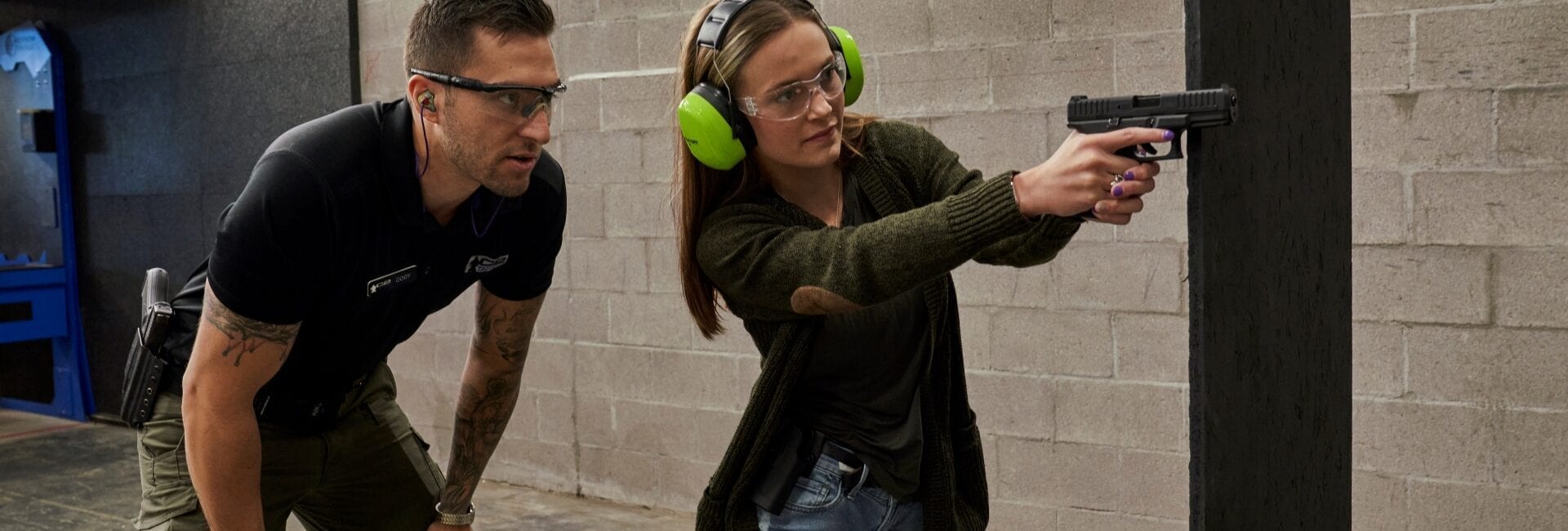
In the firearms world, we place a great deal of importance on qualifications, and for good reason. Law enforcement officers qualify with their duty weapons, armed professionals may be required to meet specific standards, and at C2 Tactical we have qualifications that allow shooters who demonstrate the necessary skills to practice certain types of holster work on our ranges.
We also hold our instructors to a measurable shooting standard. C2 Tactical instructors are required to pass the LEOSA qualification with a minimum score of 230, compared with the standard 210 passing score for law enforcement officers. We deliberately set the bar higher because the people teaching others should be expected to demonstrate a higher level of proficiency themselves.
Qualifications serve an important purpose. They establish standards, create measurable expectations, and provide a way to demonstrate that someone can perform a particular skill safely and competently.
The important thing is understanding what a qualification actually tells us.
At its simplest, it answers a fairly narrow question: Can you perform these particular tasks, to this particular standard, under these particular conditions, today?
That’s valuable information. It just isn’t the same thing as mastery.
A Standard Is a Starting Point
It’s easy to treat qualifications, certifications, permits, and even completed classes as destinations. We pass the test, receive the card or certificate, and mentally check the box.
But the skills underneath that accomplishment don’t suddenly become permanent.
Shooting is a perishable skill. Accuracy, speed, gun handling, and decision-making improve when they’re practiced thoughtfully, and they gradually deteriorate when they’re ignored. Someone who comfortably passed a qualification a year ago may not perform at the same level today if those skills haven’t been maintained. Someone who barely met the standard six months ago may now perform far beyond it because they continued training.
The qualification hasn’t changed. The shooter has.
That’s why I prefer to think of a qualification as establishing a baseline rather than announcing an accomplishment is complete. It tells us where we are at a particular moment. What we do afterward determines where we go from there.
The Test Isn’t the Skill
Most qualifications are intentionally standardized, and that’s part of what makes them useful. Everyone performs the same tasks under similar conditions, which gives us an objective way to evaluate performance.
The danger comes when we begin training specifically to pass the test rather than developing the skills the test was intended to measure.
Anyone who has spent time around standardized testing has seen this phenomenon. If people know exactly what will be tested, they can become remarkably good at performing those particular tasks. That doesn’t necessarily mean the underlying capability has improved to the same degree.
Firearms training is no different.
Real problems don’t arrive with a course of fire attached. Distances change. Positions change. Time pressure changes. Equipment behaves differently. Stress affects performance, and circumstances rarely unfold exactly the way we practiced them.
That’s why meaningful training eventually has to extend beyond the qualification itself.
What Happens After You Pass?
Passing should create a new question rather than end the conversation.
Now what?
Once you’ve demonstrated the baseline, training can become much more interesting. You can begin exploring what happens when distance increases, time decreases, or familiar conditions change. You can work on maintaining accuracy while becoming more efficient, identifying weaknesses, and understanding why a mistake occurred rather than simply firing another attempt.
This is where qualification begins turning into competence.
At C2 Tactical, our goal isn’t simply to help students pass something. We want students to understand the skills underneath the standard well enough that they can continue developing them long after the test is over.
The Bottom Line
Standards matter, and qualifications matter. They provide objective measurements and help ensure that minimum levels of performance are being met.
But minimum is the important word.
A qualification tells you that you demonstrated a particular level of performance on a particular day. It doesn’t tell you that you’ve finished learning, and it certainly doesn’t guarantee that the same level of performance will remain indefinitely.
The qualification establishes the floor. What you build on top of it is up to you. So, by all means, qualify. Then keep training.